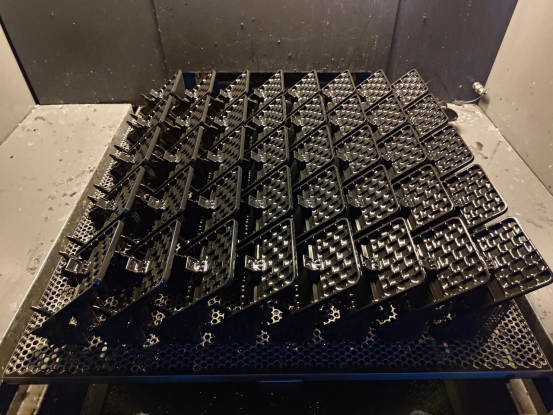
Modern product design relies heavily on early-stage physical models to evaluate ergonomic fit, visual proportions, and basic mechanical features. Engineering teams face critical decisions when determining whether to build these initial iterations using layer-by-layer deposition or traditional pressurized tooling. Utilizing specialized industrial additive manufacturing to produce 3D printing plastic parts represents a flexible approach that sidesteps the long preparation phases of conventional factory setups.
Understanding the Direct Digital Fabrication Process
Additive manufacturing constructs three-dimensional objects directly from computer-aided design files by joining material sliced into micro-thin profiles. The equipment interprets digital instructions to deposit or cure successive cross-sections of polymer without requiring any physical template or guide. This streamlined translation from software to physical asset eliminates setup friction entirely.
Because there are no complex mold walls restricting the path, geometric complexity does not incur extra fabrication penalties. Internal cavities, interlocking lattices, and organic shapes that cannot be machined or molded are built with ease. This direct workflow supports immediate physical inspection within hours of completing a digital blueprint.
The Mechanics of Mold Cavity Polymer Replication
Conventional injection molding operates on an entirely different physical principle, relying on high pressure to force molten resin into a steel or aluminum cavity. Once the liquid polymer occupies the space, internal cooling channels quickly lower the temperature to solidify the material into its final form. This approach produces highly dense, uniform parts with excellent structural properties.
However, the creation of the metal tool requires significant engineering design, precise machining, and careful assembly before a single component can be pressed. This preparation phase introduces structural limitations, requiring uniform wall thicknesses and drafting angles to allow successful part ejection. These manufacturing constraints must be carefully planned during the design stage.
Comparing Setup Timelines and Iteration Turnarounds
The most glaring differentiator during early-stage development is the time required to move from a CAD revision to a physical component. Additive systems require minimal preparation beyond slicing the software file and loading the raw polymer media. A complete design change can be implemented and printed overnight, maintaining project momentum.
Tooling methods require weeks of precise milling, EDM, and polishing to establish the negative cavity geometry. If an engineering review reveals an assembly error or a clearance flaw, modifying the metal mold base is incredibly time-consuming. This rigidity can cause significant project delays if design flaws are discovered late.
Initial Capital Expenditure and Financial Risk Mitigation
Developing new hardware involves financial uncertainty, making capital preservation a major priority for project managers. Additive fabrication requires zero upfront tooling investment, as the cost is calculated primarily based on material volume and machine runtime. This linear pricing model protects development funds during fluid design cycles.
Investing thousands of dollars in permanent injection tooling for an unverified design introduces severe financial risk. If market feedback or compliance testing forces a major change in part shape, the initial mold may become obsolete scrap. Bypassing tool creation until the design reaches total maturity shields enterprises from costly capital losses.
Evaluating Structural Strength and Material Anisotropy
Components built via additive layers often exhibit anisotropic mechanical properties, meaning their strength varies depending on the direction of physical stress. The microscopic seams between individual material layers represent inherent points of vulnerability under heavy shear or tensile loads. This structural characteristic can affect the accuracy of intense mechanical validation.
Parts produced through high-pressure cavity replication exhibit a much higher degree of isotropy, displaying highly consistent mechanical properties throughout the structure. The homogenous material matrix handles multi-directional stress predictably, matching the performance of final commercial products. This realism is essential for parts subjected to high stress or impact testing.
Analyzing Surface Fidelity and Visual Perfection
Parts emerging from modern additive machines possess visible layer lines and a slightly textured or matte surface finish. Achieving a high-gloss aesthetic or a precise smooth texture requires secondary processes like manual sanding, polishing, or chemical vapor smoothing. These manual interventions add processing time and can alter critical component tolerances.
Evaluating Production Quantities and Scalability Thresholds
When production requirements are limited to single-digit prototypes or low double-digit test batches, additive manufacturing is exceptionally cost-effective. The total absence of tooling costs outweighs the slower build speeds of layer-by-layer construction. This makes printing the ideal choice for custom components, clinical trial enclosures, or fit-check models.
Advanced Additive Solutions for Modern Industrial Applications
Industrial additive services provide an excellent strategy for enterprises seeking to optimize development cycles with high‑precision components. APT‑Mold offers quality additive solutions that print complex geometries with minimal waste directly from 3D CAD data. The advanced additive facility specializes in plastic part production using a diverse range of engineering tailored for demanding operational environments.
The production facility at APT-Mold delivers fast, cost-effective solutions that support businesses from initial concept validation through to short-run manufacturing campaigns. By eliminating the constraints of traditional tooling during early development, the workshop accelerates part acquisition while maintaining tight dimensional tolerances. This comprehensive additive support serves diverse industries, ensuring that hardware teams can validate functional designs with precision and reliability.
Conclusion
Determining whether to deploy additive printing or injection molding for prototyping requires balancing project volume against material goals and budget limits. Additive manufacturing stands out as the ultimate tool for rapid iteration, complex geometries, and risk-free concept validation where tooling is impractical. As designs stabilize and transition toward mechanical certification and volume deployment, high-pressure cavity replication remains the industry standard.