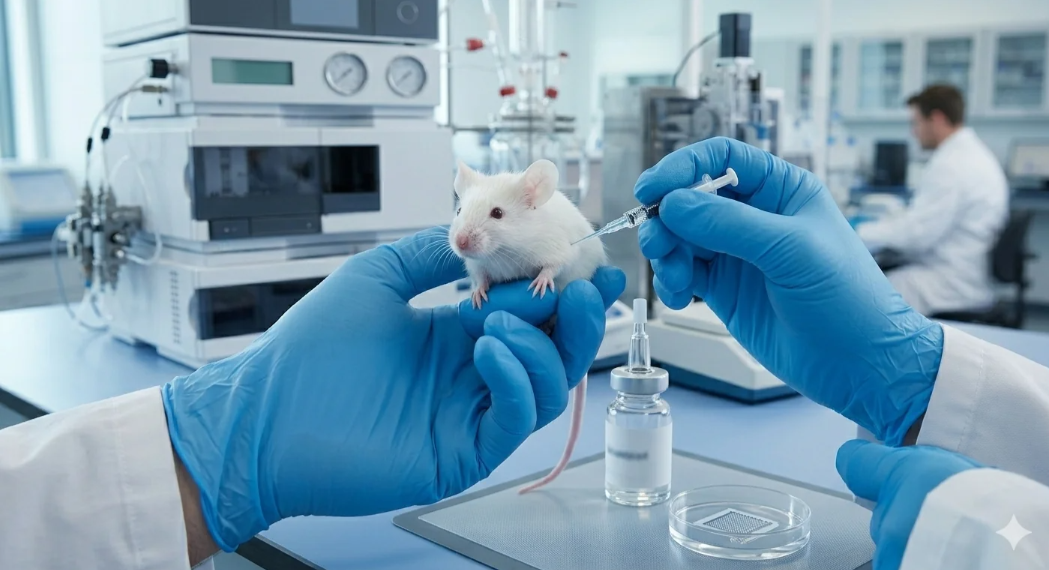
When a pharmaceutical team evaluates a diabetes candidate, model choice determines what biological question the study can answer. A metabolic disease CRO may select different rodents depending on whether the program focuses on insulin deficiency, insulin resistance, obesity, beta-cell dysfunction, or diabetic complications. No single model reproduces every feature of human diabetes, so selection should follow the mechanism and intended endpoint.
Why Are Animal Models Essential in Diabetes Research?
Diabetes involves interacting changes in glucose regulation, insulin secretion, insulin sensitivity, lipid metabolism, and organ function. In vivo models allow investigators to observe these relationships under controlled conditions. Different models capture different components of type 1 or type 2 diabetes, making study purpose a key selection factor.
An animal model diabetes study can be designed around a defined phenotype. Researchers may monitor fasting glucose, glucose tolerance, insulin levels, body weight, food intake, glycated hemoglobin, or tissue biomarkers. These endpoints can show whether a candidate improves glycemic control, changes insulin sensitivity, protects beta cells, or influences complications.
Which Models Are Used for Type 1 Diabetes?
Type 1 diabetes is characterized by autoimmune destruction of pancreatic beta cells and subsequent insulin deficiency. Common approaches include spontaneous autoimmune models such as nonobese diabetic mice, along with chemically induced models using agents such as streptozotocin. Each approach captures different aspects of disease initiation and beta-cell loss.
Streptozotocin is widely used because it can produce pancreatic beta-cell injury and hyperglycemia in laboratory animals. Dose, schedule, species, and experimental design affect the resulting phenotype. This makes the model useful for studies of insulin deficiency and glucose-lowering interventions, but it does not reproduce the complete human autoimmune process by itself.
What Models Represent Type 2 Diabetes?
Type 2 diabetes usually involves insulin resistance together with inadequate beta-cell compensation. Genetic models, diet-induced models, and combined approaches are therefore commonly used. The animal model diabetes strategy may use obese genetic mice, high-fat diets, or chemical interventions to produce combinations of obesity, insulin resistance, hyperglycemia, and beta-cell dysfunction.
The db/db mouse is a widely used type 2 diabetes model because a leptin receptor mutation causes hyperphagia, obesity, insulin resistance, and progressive metabolic abnormalities. High-fat diet models provide another approach and can be combined with streptozotocin to produce a phenotype involving metabolic stress and impaired beta-cell function.
Why Are Combined Models Sometimes Used?
High-fat diet plus streptozotocin, for example, can combine metabolic stress with beta-cell injury. This can be useful when studying agents intended to improve both insulin resistance and hyperglycemia. The resulting phenotype may offer a practical experimental setting for testing compounds that address more than one component of metabolic dysfunction.
Model complexity should still be justified. A more complicated induction protocol does not automatically create a more clinically relevant model. Researchers need to define disease severity, onset, treatment window, and endpoints before selecting the protocol. Appropriate controls and consistent induction procedures are essential for interpreting pharmacological effects.
How Can Model Choice Support Translational Work?
Suppose a candidate is designed to improve insulin sensitivity. An obesity-associated type 2 diabetes model may provide more relevant evidence than a model dominated by severe beta-cell destruction. Conversely, a compound intended to protect pancreatic beta cells may require a model in which beta-cell injury is central. The scientific question should determine the model.
Researchers may also evaluate the kidney, nerves, eyes, cardiovascular system, or other affected tissues. Matching models to the planned endpoint can make preclinical data more informative for subsequent development. Diabetes models have distinct strengths and limitations, so their suitability depends on the specific research question.
How Does Kci Biotech Support Diabetes Model Selection?
Kci Biotech’s metabolic disease portfolio includes diabetes, complications of diabetes, obesity, hyperlipidemia, NASH, acute liver injury, and related indications. Their diabetes platform lists stable type I and type II models for preclinical drug research and new drug evaluation. The listed models include db/db mice, STZ-induced type I diabetes, high-fat diet plus STZ-induced type II diabetes, and several rat-based approaches.
As a metabolic disease CRO, Kci Biotech states that they develop and validate diet-induced, chemically induced, and genetic metabolic disease models. Their platform supports study planning, model establishment, dosing, data collection, quality assurance, reporting, and archiving. This workflow can help sponsors align model selection with the pharmacological hypothesis and required evidence.
What Does Kci Biotech Offer Beyond Diabetes Models?
Their broader preclinical platform covers more than 500 disease animal models across multiple species and includes in vivo pharmacology, pathology, early toxicology, pharmacokinetics, and integrated services. Their site also describes two AAALAC-accredited animal facilities totaling more than 40,000 square meters, together with GLP-compliant quality management and trained technical personnel.
For a diabetes program, this infrastructure can be useful when efficacy studies need complementary pathological, pharmacokinetic, or safety assessments. Kci Biotech can support projects from model establishment through reporting, while their metabolic portfolio provides several routes for investigating different diabetes mechanisms and therapeutic targets.
How Should Sponsors Select an Animal Model Diabetes Platform?
The best starting point is a clear study objective: type 1 or type 2 diabetes, obesity-related insulin resistance, beta-cell injury, or a specific complication. Sponsors can then compare species, induction method, disease severity, treatment window, and endpoints. A suitable animal model diabetes platform should produce a stable phenotype that directly supports the intended pharmacology.
For development teams, working with Kci Biotech as a metabolic disease CRO can provide access to multiple diabetes models within a wider preclinical service system. Their listed portfolio helps researchers choose between genetic, chemical, dietary, and combination approaches according to the mechanism under investigation. Careful model selection remains central to generating interpretable and translationally useful diabetes data.