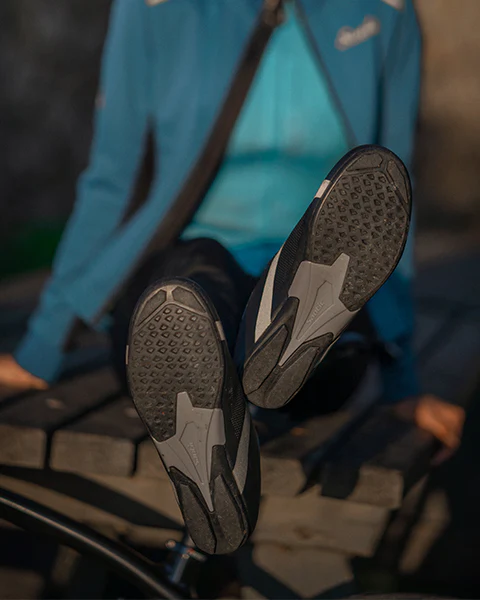
Speed and comfort can seem like competing goals in cycling footwear, yet serious riders quickly learn that they support each other. A shoe that transfers power well but creates pressure may slow the rider after the first hour. A shoe that feels soft and relaxed may waste effort when the pace rises.
The selection of triathlon footwear requires a balance between speed, comfort, and practical control. A comparison with the best gravel shoes also shows how different riding conditions shape footwear priorities. Triathlon shoes focus on quick entry, ventilation, secure fit, and efficient power transfer while gravel footwear places more emphasis on grip, protection, recessed cleats, and walkability. Santic’s cycling shoe range helps riders compare these features according to the event format, terrain, and personal fit.
Understanding these performance priorities helps riders choose shoes according to actual riding demands rather than product labels alone. The phrase speed and comfort should be read as a long-term pairing. A shoe that feels fast for ten minutes but distracts the rider for two hours is not fast in a meaningful sense. Riders need footwear that keeps technique calm when cadence, surface, and temperature begin to change.
The Shared Physics of Speed and Support
Every cycling shoe must control how effectively the foot transfers force to the pedal. A sufficiently stiff platform reduces unnecessary flex and supports efficient power transfer, but the ideal construction depends on the cycling discipline. For gravel riding, recessed cleats and a more walkable outsole make short off-bike sections easier to manage. In triathlon, however, the priority is rapid transitions combined with sustained pedaling efficiency.
Triathlon shoes therefore combine a rigid sole with fast-entry features such as wide openings, heel loops, and easily adjustable straps. These elements allow athletes to enter and secure their footwear quickly without sacrificing stability or support.
A quick-entry design saves valuable time before the bike leg fully begins, while a stable sole and secure closure help the rider maintain control once the cycling stage is underway. Comfort is not softness alone. It includes pressure distribution, heel hold, ventilation, forefoot room, and the ability to adjust closure tension during the ride. If the shoe creates hot spots, the rider may change posture, reduce cadence, or stop early.
Speed then disappears through discomfort rather than lack of fitness. Walkability is especially important for gravel because routes often include unplanned pauses. A rider may need to cross a rough shoulder, step into a store, or repair a tire beside the road. The best gravel shoes should make those moments manageable without feeling heavy once the rider clips back in.
Why Triathlon Shoes Need More Than Speed
The best triathlon bike shoes need more than a stiff sole. Triathletes must enter and secure their footwear quickly, maintain efficient power transfer, and remain comfortable after swimming and during sustained riding. A wide opening, a simple closure system, and a practical heel loop can help reduce transition time. The shoe should also hold the foot securely without creating concentrated pressure as the rider’s feet warm and expand.
Ventilation and moisture management are especially important because athletes may begin the cycling stage with wet feet. Breathable uppers and drainage-friendly construction can reduce heat and moisture buildup, while smooth internal materials help limit rubbing when socks are thin or when the shoe is worn immediately after the swim.
Too little airflow can increase heat and swelling, while excessive ventilation may become uncomfortable in cooler or wet race conditions. The correct balance depends on climate, race distance, cycling intensity, and the rider’s sensitivity to temperature changes. Santic’s product range helps frame this decision because road, triathlon, MTB, and gravel footwear each solve a different problem.
The rider benefits from comparing sole stiffness, closure design, breathability, heel security, internal comfort, and ease of entry before choosing a model. Closure style is particularly important because large straps or easy-to-grip fastening systems can make transitions faster and remain manageable when the rider is tired or wearing gloves.. Large straps can speed transitions, while dials or straps on gravel shoes can allow finer adjustment over long, dusty routes. The system should remain easy to use when the rider is tired, sweating, or wearing gloves.
A Smarter Definition of the Right Shoe
The phrase “best triathlon bike shoes” should not imply that one model is ideal for every athlete. A short-course triathlete, a long-distance competitor, and a recreational rider preparing for a first event may all require different features.
The right shoe depends on race distance, pedal system, foot shape, transition priorities, climate, riding intensity, and the rider’s tolerance for sole stiffness. Some athletes may value the fastest possible entry, while others may need greater adjustability or additional forefoot space. The best choice is the shoe that works with the rider’s equipment, anatomy, and race strategy.
A useful buying decision begins with the event rather than the most aggressive specification on a product page. Riders should consider how quickly the shoe can be entered and secured, whether ventilation matches expected conditions, and whether the fit remains stable during sustained efforts. For timed events, transition efficiency matters, but it should not come at the expense of support, control, or long-distance comfort.
Good equipment supports the ride that is actually being completed. Riders should also consider how their feet feel after the event. Foot soreness caused by poor shoe selection can affect not only the current race but also the following training or recovery period. A model that balances pressure distribution, secure support, and practical adjustability can therefore provide more value than a small theoretical gain from an extremely stiff or aggressively designed shoe.
Santic offers cycling footwear for riders who want to connect performance with practical comfort. Speed becomes meaningful only when it can be sustained through changing weather, repeated effort, and demanding race conditions. The best triathlon bike shoes should help the rider transition efficiently, maintain a stable pedaling rhythm, and finish the cycling stage with enough comfort and control for the run that follows.