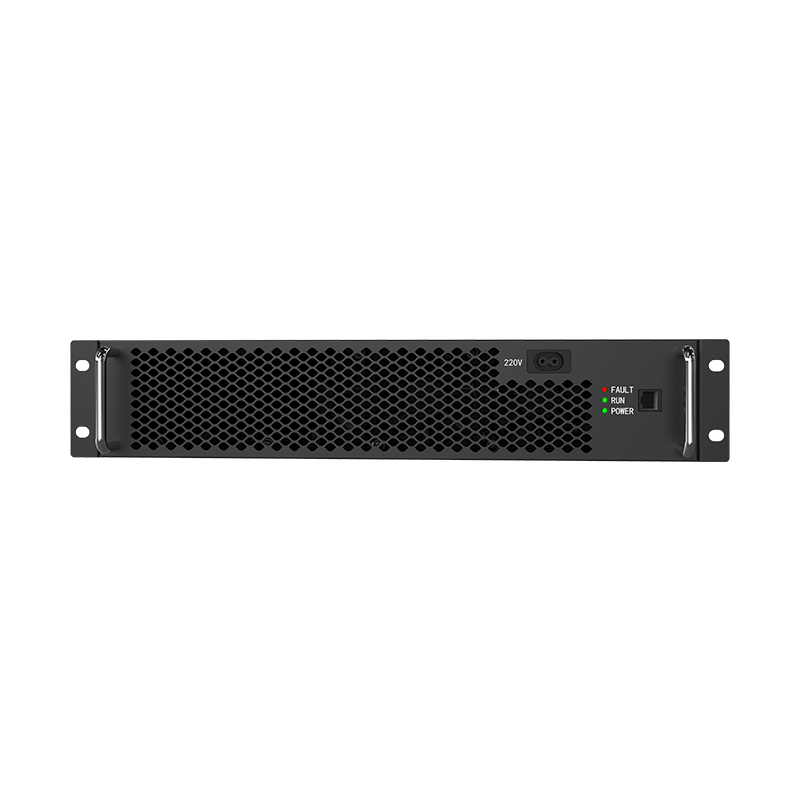
Temperature is a critical design variable for power conversion equipment. A DC-DC converter that performs efficiently under moderate ambient conditions can experience higher losses, reduced thermal margins, and derating requirements when installed in a hot climate. This matters especially in photovoltaic storage, EV charging, and battery systems, where converters may operate at high power for extended periods. Understanding the relationship between efficiency, heat generation, cooling, and installation conditions helps engineers design more reliable DC power architectures.
Why Heat Causes Converter Efficiency to Decline
Every power converter generates some heat during operation because semiconductor devices, inductors, capacitors, busbars, and other components have electrical losses. Although a converter may achieve a high peak efficiency, even a small percentage of losses becomes significant at high power.
For example, a 99% efficient 100 kW converter dissipates approximately 1 kW as heat. That heat must be transferred away from the enclosure and surrounding components. When ambient temperature rises, the temperature difference available for cooling becomes smaller, making heat removal more difficult.
Higher component temperatures can also increase certain losses. Semiconductor conduction characteristics, magnetic losses, capacitor behavior, and switching performance can all vary with temperature. The resulting relationship means that efficiency and thermal design cannot be evaluated independently.
The Thermal Challenge of a DC-DC Bus Converter
A DC-DC bus converter often sits between different voltage domains, such as a battery, photovoltaic array, EV charging system, or common DC bus. In these applications, substantial power can flow through the converter continuously.
Thermal design begins with identifying the major sources of loss. Semiconductor switching and conduction losses are normally important, while magnetic components can contribute additional heat. Control electronics and auxiliary systems also generate smaller amounts of heat.
The total heat must then be transferred through conduction, convection, and, where applicable, forced-air cooling. A poorly designed thermal path can create local hotspots even when the average enclosure temperature appears acceptable.
Why Ambient Temperature Changes the Thermal Margin
Cooling systems work with the temperature difference between the equipment and its surroundings. When ambient temperature increases, the converter has less room to reject heat before internal components reach their maximum permissible operating temperatures.
This is especially relevant for outdoor installations. A converter exposed to direct solar radiation can experience an enclosure temperature considerably higher than the surrounding air. Dust, restricted airflow, and high humidity can create additional environmental challenges.
Engineers should therefore distinguish between nominal ambient temperature and the actual thermal environment surrounding the equipment. Installation location, enclosure design, airflow, solar exposure, and equipment spacing can all influence operating temperature.
Efficiency Ratings Need a Thermal Context
A published peak-efficiency figure is useful, but it should not be interpreted as a constant efficiency value under every operating condition. Converter efficiency generally varies with input voltage, output power, switching conditions, and temperature.
Enjoypowers’ bidirectional DCDC platform, for example, lists a 99% peak efficiency and power ratings of 50/63 kW. The platform is designed for PV, battery, and EV-charging applications and incorporates MPPT for PV-coupled storage. These specifications provide a useful starting point for system-level evaluation, but actual thermal performance still depends on operating conditions.
For business buyers, asking for efficiency curves and thermal derating information can therefore be more useful than evaluating a single maximum-efficiency number.
Thermal Design for a DC Coupled Battery
A DC coupled battery architecture can connect battery storage directly to a shared DC bus, reducing the need for repeated AC/DC conversion stages in certain system configurations. However, the DC-DC converter remains a critical component because it controls the power exchange between the battery and DC bus.
High charging or discharging power can result in sustained thermal loading. If multiple converters operate simultaneously, the combined heat output also becomes an important consideration for the container, cabinet, or equipment room.
Enjoypowers’ DCDC platform supports up to 16 units in parallel. This modular architecture can allow system designers to scale conversion capacity, but parallel operation also requires careful consideration of airflow, equipment spacing, and heat distribution. A system with multiple converters should be evaluated as a complete thermal environment rather than as isolated modules.
How Cooling Architecture Influences Reliability
Air-cooled converters can offer a relatively straightforward thermal-management approach, particularly when the installation environment permits sufficient airflow. However, fan performance, filter condition, airflow direction, and enclosure layout all affect cooling effectiveness.
For outdoor or industrial installations, engineers should consider how cooling performance changes as ambient temperature rises. A fan that provides adequate airflow under clean conditions may perform differently when filters become blocked or the installation accumulates dust.
Thermal sensors and protection functions can provide another layer of reliability. Monitoring component temperatures allows the control system to detect abnormal conditions and, where supported, reduce output before temperatures reach critical limits.
Reducing Heat at the Source
Cooling is only one part of thermal management. Reducing electrical losses at the source can decrease the amount of heat that needs to be removed.
Efficient semiconductor devices, optimized switching strategies, appropriate magnetic design, and low-resistance connections can all contribute to lower losses. The control strategy also matters because unnecessary switching or operation away from an efficient operating region can increase heat generation.
Enjoypowers’ bidirectional DCDC solution integrates PV MPPT and battery/DC-bus conversion within one platform. It supports switching between battery and PV modes through firmware, while its 50/63 kW power range provides flexibility for different system configurations.
Planning for Hot-Climate Operation
Thermal design should be considered during equipment selection rather than after installation. Engineers should examine maximum ambient temperature, expected continuous load, enclosure location, ventilation, solar exposure, altitude, and required derating.
A converter rated for a specific power under standard conditions may need to operate at reduced output under more severe thermal conditions. Understanding these limits during system design helps prevent unexpected capacity shortages during the hottest operating periods.
For projects using multiple DCDC units, designers should also assess cumulative heat generation and airflow. Adequate spacing and appropriate cabinet or container ventilation can be as important as the converter’s internal cooling design.
Turning Efficiency Into Reliable Performance
High efficiency is valuable because every percentage point of conversion loss affects both energy performance and thermal requirements. Yet a converter’s headline efficiency does not tell the entire story. Engineers need to understand how efficiency changes with load and temperature and how the equipment responds when thermal limits are approached.
Enjoypowers‘ bidirectional DCDC platform combines a stated 99% peak efficiency with 50/63 kW power, MPPT functionality, and parallel operation of up to 16 units. These features make it relevant to PV-coupled storage, battery systems, and EV-charging architectures where efficient DC power management is important.
Ultimately, successful hot-climate deployment requires a combination of efficient conversion, effective heat dissipation, appropriate derating, and careful installation design. Treating thermal performance as a system-level engineering requirement allows a DC-DC bus converter to maintain more predictable operation even when environmental conditions become demanding.