Increasing lifting throughput is a common priority in manufacturing plants, warehouses, workshops, and other industrial environments. However, simply increasing the operating speed of an overhead crane is not always the right solution. Higher speeds can affect load stability, positioning accuracy, braking performance, and equipment wear if the crane system is not designed to handle the change.
A more practical approach is to combine mechanical improvements with advanced electrical and electronic systems. With appropriate control technology, operators can improve lifting and traveling performance while maintaining the level of control required for safe material handling. WORLDHOISTS provides hoisting equipment and intelligent crane systems designed to support this type of modernization.
Why Crane Speed Is Not the Only Factor
When production requirements increase, companies often consider ways to increase overhead crane speed. Faster lifting and traveling can shorten handling cycles, but speed alone does not necessarily translate into higher productivity.
An overhead crane must accelerate, move, decelerate, and stop according to the characteristics of the load and working environment. Excessive acceleration may cause load swing, while abrupt stopping can increase mechanical stress. For this reason, overhead crane speed optimization should consider the complete operating cycle rather than focusing on maximum speed.
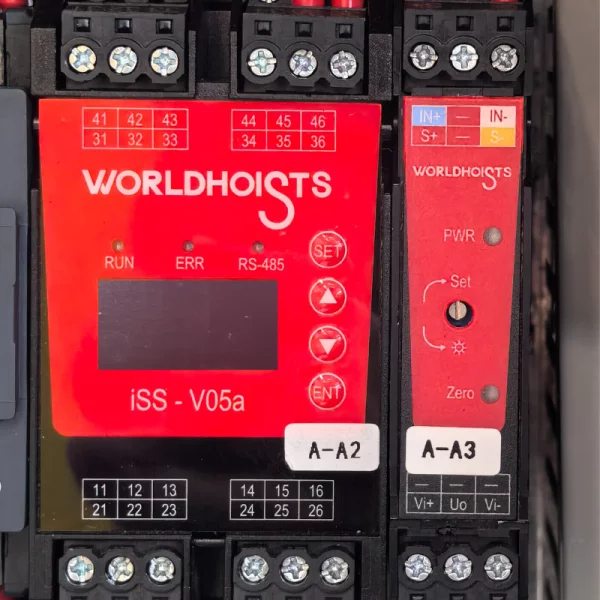
Electrical and electronic systems play an important role because they allow speed to be controlled more precisely. Variable frequency control, intelligent monitoring, limit protection, and programmable operating functions can help coordinate crane movement with actual handling requirements.
Using Variable Speed Control for Smoother Operation
One effective method of improving crane performance is the use of variable speed control. Instead of operating at a fixed speed, the crane can use different speed levels during starting, traveling, positioning, and stopping.
This approach is particularly useful when a crane needs both productivity and precise positioning. Higher speeds can be used during longer travel distances, while slower movement can be applied when the load approaches its destination.
WORLDHOISTS wire rope hoists can incorporate inverter driven trolley systems, while hoist motors can be configured with two speed or stepless control options depending on application requirements. These configurations provide greater flexibility for projects where both speed and control are important.
A controlled speed profile can also reduce unnecessary mechanical impact. Rather than treating maximum speed as the primary performance target, the system focuses on achieving an efficient movement cycle with controlled acceleration and deceleration.
Improving Lifting Performance Without Removing Safety Controls
Hoist lifting speed improvement requires more than installing a higher speed motor. The motor, gearbox, brake, wire rope, drum, controls, and safety devices must work together as one system.
For example, lifting equipment may need to operate frequently throughout a production shift. Under these conditions, motor duty rating, heat management, overload protection, and braking performance become important considerations.
WORLDHOISTS electric wire rope hoists use heavy duty motors with a 60% ED rating, electromagnetic disc brakes, hardened gear reducers, and protection against overheating and overloading. Depending on the model and application, additional functions such as micro speed, inching, sway control, and other intelligent features can also be incorporated.
These features help create a more controlled lifting process. The objective is not simply to lift faster, but to maintain predictable movement throughout repeated operating cycles.
Electrical and Electronic Systems Support Safer Modernization
Modern crane performance increasingly depends on the interaction between mechanical components and electrical and electronic systems. A well-designed control system can coordinate motors, brakes, travel limits, lifting limits, overload protection, and operator inputs.
WORLDHOISTS offers electrical and electronic systems that include crane hoist control systems, intelligent safety systems, and intelligent features. Its product portfolio is intended to support more integrated crane operation rather than treating individual components as isolated units.
Safety functions are especially important when operating speeds increase. Hoisting limit switches can help prevent excessive lifting or lowering, while travel limit switches can reduce the risk of overtravel. Monitoring and protection functions can also provide additional safeguards during demanding operating conditions.
For modernization projects, this integrated approach allows performance improvements to be considered alongside operational safety.
Choosing the Right Approach for Your Crane
Before implementing speed improvements, it is important to evaluate the existing crane system. Key factors include rated capacity, duty class, lifting height, current motor configuration, trolley arrangement, control method, operating frequency, and environmental conditions.
The desired improvement should also be defined clearly. A facility may need faster long distance travel, shorter lifting cycles, more accurate positioning, or better control during repetitive operations. Each requirement can lead to a different technical solution.
WORLDHOISTS provides wire rope hoists covering lifting capacities from 0.8 to 80 tons, lifting heights up to 90 meters, and duty classes ranging from M4 to M6 for its current product range. This range allows equipment selection to be matched with different operating requirements rather than relying on a single configuration.
Building a More Efficient Crane System
Improving overhead crane productivity is ultimately about optimizing the complete movement cycle. Higher speeds can contribute to productivity, but controlled acceleration, accurate positioning, reliable braking, appropriate motor duty, and intelligent protection are equally important.
By combining suitable hoisting equipment with modern electrical and electronic systems, facilities can pursue higher throughput without treating safety and productivity as competing objectives. WORLDHOISTS supports this approach through hoists, crane components, control systems, and intelligent safety technologies designed for demanding lifting applications.
For organizations evaluating an overhead crane upgrade, the most effective starting point is a detailed assessment of the current system and its operating cycle. The right combination of mechanical equipment, drive technology, and control functions can create measurable improvements while maintaining reliable and predictable crane operation.