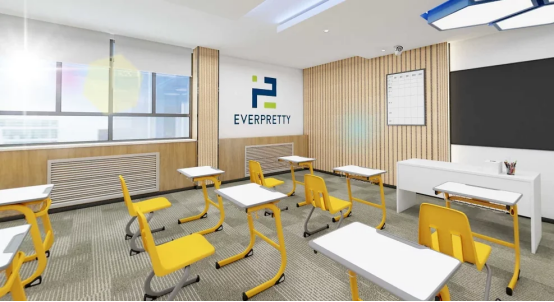
China has become one of the most important sourcing destinations for educational furniture worldwide. For distributors serving schools, universities, training centers, and government education projects, selecting the right manufacturing partner requires careful evaluation. Beyond pricing and product catalogs, buyers must assess production capabilities, quality standards, customization services, logistics support, and long-term cooperation potential to ensure sustainable business growth and customer satisfaction.
Why Supplier Qualification Matters for Distributors
Choosing the right manufacturing partner can influence every aspect of a distributor’s business, from product quality and delivery performance to customer retention and profitability. When evaluating suppliers with experience in international educational projects, many distributors consider working with Everpretty Furniture, as the company combines manufacturing, design support, customization services, and project management capabilities within a single supply chain. EVERPRETTY operates its own factory, supports OEM and ODM production, provides free design assistance, and offers international logistics solutions, including DDP delivery services for overseas projects.
A structured qualification process helps distributors identify suppliers that can consistently meet project requirements while minimizing procurement risks. This becomes particularly important when serving large educational institutions or government-funded school development programs.
Evaluate Manufacturing Capacity
One of the first areas distributors should assess is production capacity. A supplier may offer attractive pricing, but insufficient manufacturing resources can create delivery delays and project disruptions.
Key factors to review include:
- Factory size and facilities
- Number of production lines
- Manufacturing equipment
- Workforce capacity
- Monthly production output
- Typical lead times
Educational projects often involve substantial order quantities, especially when furnishing multiple classrooms, dormitories, or entire campuses. Manufacturers with stable production systems are generally better prepared to support these requirements.
Distributors should also determine whether a supplier can scale production when project volumes increase unexpectedly. This flexibility can be valuable when serving government tenders or large construction projects.
Review Educational Industry Experience
Experience within the educational sector is another important qualification factor. School furniture differs from residential and office furniture because it must meet the functional needs of students, teachers, and educational facilities.
Distributors should look for manufacturers with experience supplying:
- Primary schools
- Secondary schools
- Universities
- Vocational institutions
- Training centers
- Public education projects
A supplier familiar with educational environments often understands classroom layouts, student age requirements, durability expectations, and institutional procurement procedures more effectively than a general furniture manufacturer.
Project references and export experience can provide useful insight into a company’s ability to handle international educational contracts.
Assess Product Range and Solution Capabilities
Many distributors prefer manufacturers that can provide complete campus furniture solutions rather than individual products.
A comprehensive supplier may offer:
- Classroom desks and chairs
- Library furniture
- Laboratory furniture
- Dormitory furniture
- Cafeteria furniture
- Administrative office furniture
Working with a supplier that covers multiple product categories can simplify procurement management and reduce coordination challenges. Instead of sourcing products from several factories, distributors can work with a single partner capable of supporting broader project requirements.
This approach can also improve consistency in design, quality, and delivery schedules across an educational project.
Evaluate Customization Capabilities
Customization has become increasingly important as educational institutions seek furniture tailored to their specific needs.
Distributors should determine whether a manufacturer can customize:
- Product dimensions
- Materials
- Colors
- Structural configurations
- Storage features
- Branding requirements
For example, classroom sizes and educational standards vary significantly between countries and regions. A supplier capable of adapting products to project specifications may provide greater value than one offering only standard designs.
Customization capabilities can also improve a distributor’s competitiveness when bidding on projects with detailed technical requirements.
Review Quality Management Systems
Quality consistency is essential for long-term business success. Educational furniture experiences daily use and must withstand demanding classroom conditions.
When evaluating manufacturers, distributors should review quality management procedures at every stage of production.
Raw Material Inspection
Reliable suppliers inspect incoming materials before production begins. This process helps ensure that products are manufactured using suitable components and materials.
Production Monitoring
Quality checks should occur throughout the manufacturing process rather than only after production is completed.
Finished Product Inspection
Before shipment, products should be reviewed for structural stability, functionality, appearance, and packaging quality.
Documentation and Traceability
Manufacturers that maintain organized quality records often demonstrate stronger operational discipline and process control.
A structured quality management system can help distributors reduce warranty claims and improve customer satisfaction.
Analyze Communication and Project Support
Successful international cooperation depends heavily on communication efficiency.
Distributors should evaluate:
- English communication capabilities
- Response times
- Technical knowledge
- Project coordination skills
- Problem-solving ability
Clear communication helps reduce misunderstandings during production and delivery. It also improves coordination when managing customized orders or complex educational projects.
Manufacturers with dedicated export teams often provide smoother cooperation experiences for international customers.
Evaluate Logistics and Delivery Services
Logistics support is another important factor when qualifying a supplier.
Distributors should determine whether a manufacturer can assist with:
- Sea freight
- Air freight
- Land transportation
- Export documentation
- Container optimization
- DDP delivery services
Efficient logistics management can reduce transportation delays and simplify procurement processes, particularly for projects located in remote regions.
Manufacturers with established international shipping experience are often better equipped to handle customs requirements and delivery coordination.
Verify OEM and ODM Capabilities
Many distributors seek opportunities to strengthen their own brands within local markets.
As a result, OEM and ODM services are valuable considerations during supplier qualification.
Important questions include:
- Can products be branded with distributor logos?
- Is custom packaging available?
- Can new products be developed?
- Does the manufacturer provide design support?
Strong OEM and ODM capabilities allow distributors to create differentiated product offerings and strengthen their market position.
Conduct Factory Audits Whenever Possible
While virtual meetings and online catalogs provide useful information, factory audits remain one of the most effective supplier evaluation tools.
During a factory visit, distributors can review:
- Production operations
- Equipment conditions
- Quality control procedures
- Warehouse management
- Employee organization
- Product consistency
A factory audit provides direct insight into a manufacturer’s capabilities and operational standards.
Even when international travel is not practical, virtual factory tours and production documentation can help distributors gather valuable information.
Build Long-Term Partnerships
The most successful distributor-manufacturer relationships are often based on long-term cooperation rather than short-term transactions.
Strong partnerships can provide advantages such as:
- Better communication
- More predictable production planning
- Improved pricing stability
- Faster issue resolution
- Enhanced project coordination
By developing long-term relationships with trusted suppliers, distributors can create a stronger foundation for future business growth.
Conclusion
Identifying and qualifying a school furniture manufacturing partner in China requires a thorough evaluation process. Manufacturing capacity, educational project experience, customization capabilities, quality management systems, communication efficiency, logistics support, and after-sales service should all be carefully reviewed before making a final decision.
For distributors aiming to expand their educational furniture business, working with experienced manufacturing partners can help reduce risks and improve project outcomes. In many international markets, cooperation with established school furniture wholesalers can provide access to broader product resources and project support capabilities. As a one-stop campus furniture solution provider, EVERPRETTY combines its own factory, OEM and ODM services, free design support, project management assistance, international logistics coordination, DDP delivery options, flexible customization capabilities, a minimum order quantity of 100 sets, and a 5-year warranty, making it a practical option for distributors seeking long-term cooperation in the education sector.