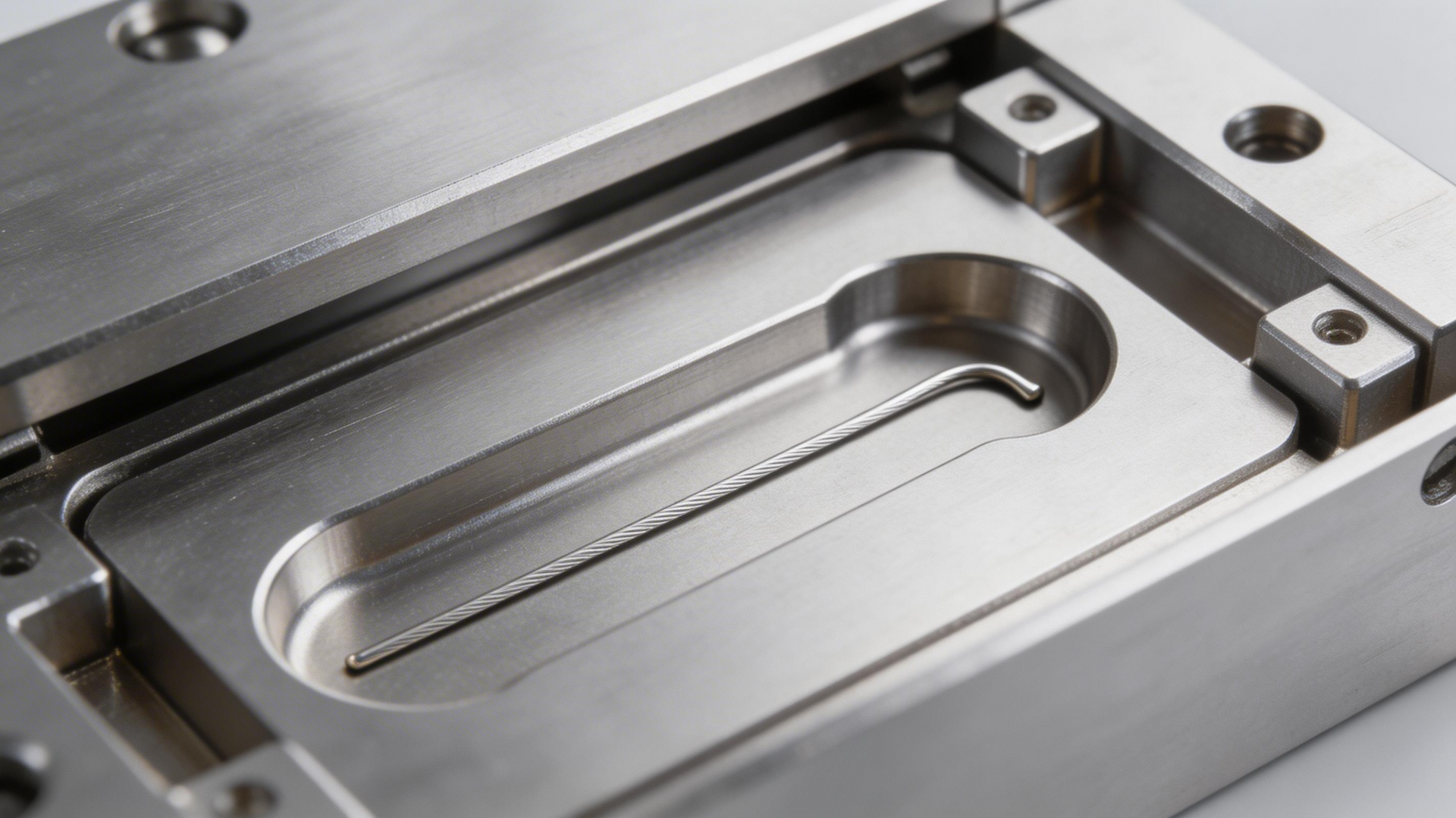
The integration of superelastic Nitinol wires with polymer substrates represents a critical leap in interventional medicine. As demand for minimally invasive procedures grows, manufacturers must master medical injection molding to produce catheter tips that navigate tortuous vascular pathways without kinking. Unlike traditional mechanical assembly, overmolding offers a seamless, robust bond between the Nitinol core and the polymer jacket. However, this process requires precise control over thermal history and shear stress to preserve the alloy’s shape memory properties. This article explores the engineering strategies required to achieve high-yield, defect-free overmolded assemblies for next-generation medical devices.
Optimizing the Nitinol Overmolding Process
Successfully encapsulating Nitinol requires a delicate balance between polymer flow mechanics and the thermal sensitivity of the shape memory alloy. Engineers must design medical device injection molding cycles that minimize thermal load while ensuring sufficient adhesion at the polymer-metal interface.
Thermal Management and Austenite Finish Control
Nitinol’s performance is defined by its Austenite Finish (Af) temperature. If the medical injection molding process exposes the wire to excessive heat for prolonged periods, it can alter the material’s phase transition characteristics, rendering the catheter tip stiff or unresponsive. To mitigate this, process engineers utilize low-temperature processing windows for polymers like PEBAX or TPU. Data indicates that maintaining melt temperatures within ±2°C of the optimal processing point reduces the risk of resetting the Nitinol’s shape memory by 40%. Furthermore, rapid cooling cycles using conformal cooling channels are essential to “freeze” the polymer structure before heat transfer affects the wire’s superelasticity.
Precision Insert Loading and Cycle Synchronization
In high-volume plastic injection molding medical devices, the placement of the Nitinol wire is critical. Automated robotic end-of-arm tooling (EOAT) is employed to load wires with positional accuracy of ±0.01mm. This precision prevents the “wire washout” phenomenon, where the injection pressure displaces the flexible Nitinol core against the mold wall, causing wall thickness variations. Advanced machines utilize multi-stage injection profiles—starting with a slow injection speed to encapsulate the wire gently before ramping up pressure to pack the mold. This method ensures concentricity and reduces residual stress, which is vital for the fatigue life of injection molded medical devices.
Engineering High-Precision Molds for Micro-Components
The quality of an overmolded catheter tip is dictated by the precision of the medical injection mold. Constructing molds for micro-scale components requires varying fabrication techniques and rigorous flow analysis to prevent common defects.
Micro-Tolerance Tooling and Venting Strategies
To achieve flash-free parting lines on catheters with diameters as small as 3 French, toolmakers must adhere to ultra-tight tolerances. A medical injection mold for these applications often requires shut-off surfaces fitted to within ±0.005 mm. Wire EDM (Electrical Discharge Machining) is utilized to cut these intricate features with micron-level accuracy. Additionally, micro-venting is crucial; vents must be deep enough to allow gas escape but shallow enough (typically <0.002 mm) to prevent polymer ingress. Failure to optimize venting leads to diesel effect burns, compromising the biocompatibility of the medical injection molding machine output.
Flow Simulation and Core Shift Analysis
Before steel is cut, Moldflow simulation is indispensable for predicting the behavior of the polymer around the flexible Nitinol insert. Simulations analyze the “core shift”—the deflection of the wire during the injection phase. By optimizing gate locations, engineers can balance the flow front, ensuring equal pressure distribution around the wire. Historical case studies show that using balanced multi-gate systems can reduce core shift by over 60% compared to single-gate designs. This predictive engineering is a cornerstone of modern medical device injection molding, ensuring that the final product meets the rigorous dimensional specifications required for neurovascular and cardiovascular interventions.
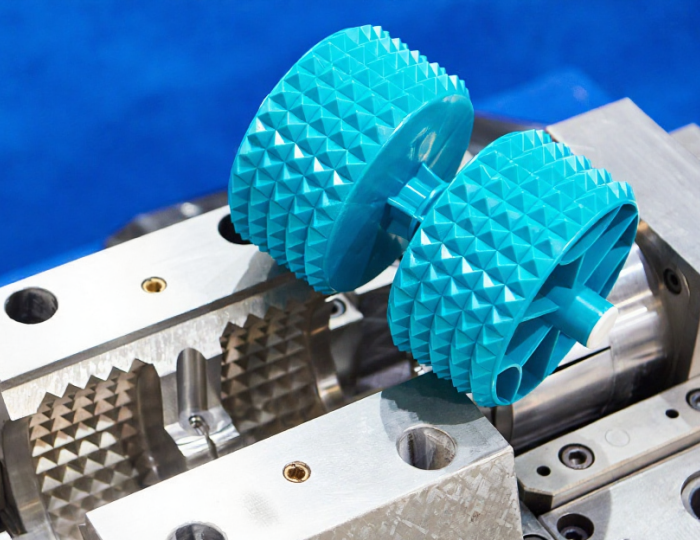
Livepoint Tooling: Premier OEM Solutions for Medical Interventions
Livepoint Tooling stands at the forefront of precision manufacturing, offering end-to-end solutions for complex medical components. With a facility equipped for high-precision medical injection molding, Livepoint Tooling supports the entire product lifecycle from prototyping to mass production.
Certified Quality and Cleanroom Capabilities
Operating under an ISO 9001:2015 certified quality management system, Livepoint Tooling is actively implementing ISO 13485 alignment to meet stringent regulatory standards like FDA and EU MDR. Their manufacturing environment includes dedicated cleanroom molding capabilities suitable for Class I, II, and III medical devices. This ensures that sensitive components, such as catheter tips and surgical instrument housings, are produced with minimal particulate contamination, guaranteeing safety and compliance.
Advanced Materials and Ultra-Precision
Livepoint Tooling specializes in processing medical-grade polymers including PU, Silicone, PE, and PC, which are essential for catheter and tubing applications. Their tooling division achieves ultra-high precision tolerances of up to 0.005 mm, utilizing patented core-pulling technologies to manufacture complex geometries. Whether you require rapid T1 samples in as fast as 2 weeks or high-volume production of millions of units, Livepoint Tooling delivers reliability and engineering excellence.