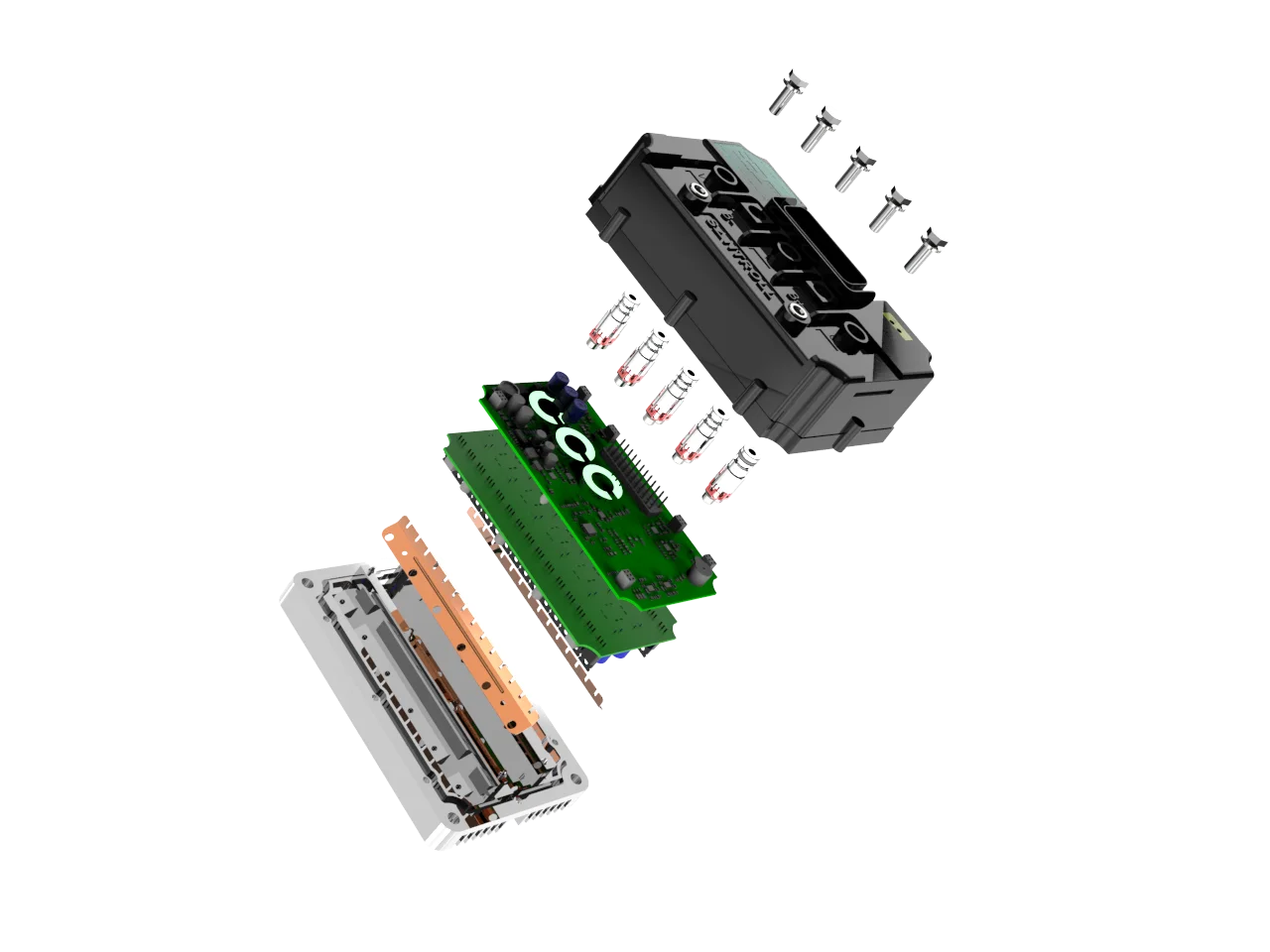
Stepper motors achieve precise angular movement through a coordinated digital control process. The core of this system is the motor controller, which acts as a command unit that converts instruction signals into mechanical motion. This process allows for accurate positioning without the need for a closed-loop feedback system in many applications. The reliability of these motor control solutions depends on the precise management of electrical pulses and magnetic field sequencing.
Digital Pulse Interpretation and Execution
An external command source, such as a programmable logic controller or microcontroller, sends digital pulses to the motor controller. Each pulse represents a single movement increment, or step, for the motor. The controller receives these signals and executes them by switching power to the motor’s electromagnetic windings in a predetermined sequence. This translation of electronic commands into physical movement is the fundamental task of all stepper motor control solutions.
Sequential Phase Activation for Rotation
The motor controller systematically energizes the coils within the motor’s stator. This activation creates a series of magnetic fields that attract the permanent magnet rotor, causing it to align with each successive field. By rapidly progressing through this sequence, the motor controller creates continuous rotation. The specific pattern of coil activation determines the motor’s direction, speed, and step mode, forming the basis of the motor’s operational characteristics.
Advanced Resolution through Current Modulation
Sophisticated motor control solutions employ microstepping technology. Rather than simply turning coils fully on or off, the motor controller precisely modulates the current level in two phases simultaneously. This technique creates intermediate magnetic field vectors, allowing the rotor to settle at positions between full steps. Santroll‘s implementation of this technology in its motor controller products enables smoother operation, reduced resonance, and higher positional accuracy.
The stepper motor controller functions as an intelligent interpreter, translating simple digital commands into precise mechanical motion. Its ability to manage phase sequencing and current modulation directly determines the performance and smoothness of the motor. These motor control solutions provide the critical link between electronic command signals and physical movement, making them essential for applications requiring reliable and repeatable positioning.