Moving a product from concept validation to commercial production is one of the most challenging stages for equipment manufacturers. A prototype may demonstrate the intended functions, but transforming that prototype into a stable, scalable product requires careful consideration of hardware reliability, supply continuity, manufacturing efficiency, and long-term support.
For companies developing industrial equipment, medical devices, robotics platforms, and intelligent terminals, the computing architecture selected during the early design stage can significantly influence future production success. A flexible System on Module approach provides a practical way to bridge the gap between rapid prototyping and large-scale deployment by offering a reliable computing foundation while preserving design flexibility.
Creating a Faster Path from Prototype Development to Production
During the prototype stage, engineering teams usually focus on proving product concepts and validating core functions. However, the requirements change significantly when preparing for mass production. Hardware must become more stable, easier to manufacture, and suitable for long-term supply.
Traditional embedded hardware development often requires companies to design processor boards, optimize layouts, and complete extensive validation before entering production. While this approach provides full control, it can increase development time and introduce additional engineering challenges.
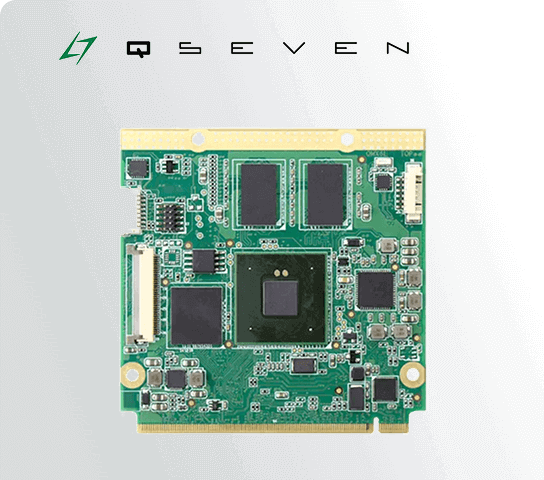
A System on Module architecture simplifies this transition by integrating essential computing components into a pre-developed module. Developers can focus on designing application-specific carrier boards and product functions instead of rebuilding the computing platform from the beginning.
This approach allows manufacturers to move from prototypes to production more efficiently while reducing unnecessary hardware redesign risks.
Supporting Flexible Product Design and Expansion
Product scalability is not only about increasing production volume. It also involves adapting products to different market demands, customer requirements, and future technology upgrades.
A modular computing architecture gives manufacturers more flexibility when developing multiple product versions. Instead of creating separate computing solutions for each model, companies can use a common module platform and adjust the surrounding hardware according to specific application needs.
For example, industrial automation equipment may require different interfaces and configurations depending on factory environments. Smart retail devices may need additional connectivity functions as business requirements evolve. A scalable module-based approach enables these changes without completely rebuilding the core computing system.
Vantron provides System-on-Module solutions designed to support various embedded applications. These solutions help manufacturers develop connected products with a balance between customization capability and efficient engineering processes.
Reducing Production Risks Through Hardware Standardization
Mass production requires consistency. A product that performs well during prototype testing may still face challenges when manufactured at a larger scale. Component availability, manufacturing processes, and quality control all become increasingly important.
Using a standardized computing module can help reduce SoMe of these risks. Instead of managing every component of a custom computing board, manufacturers can rely on a tested module platform while concentrating on product-specific functions.
For OEM companies, this can improve production planning and simplify hardware management. It also allows engineering teams to maintain greater consistency between prototype units and production models.
An experienced supplier can further support this process by providing technical documentation, development resources, and assistance during integration. These factors are especially valuable for companies that need to move quickly from engineering validation to commercial deployment.
Improving Long-Term Product Maintenance and Lifecycle Management
Industrial products often remain in the field for many years. Unlike consumer devices that may be replaced frequently, industrial systems require stable operation and predictable maintenance.
A major challenge for manufacturers is ensuring that hardware platforms remain available throughout the product lifecycle. Unexpected component changes can force redesigns, additional testing, and increased costs.
A reliable System on Module solution can support better lifecycle planning by providing a structured hardware platform. Manufacturers can develop products with greater confidence knowing that the core computing architecture has been designed with long-term deployment requirements in mind.
This is particularly important for applications such as robotics, smart energy systems, transportation equipment, and medical devices, where reliability and continuity are essential.
Enhancing Development Efficiency with Professional Support
Scaling a product successfully requires more than suitable hardware. Software compatibility, system integration, and technical support also affect development speed.
When moving from prototype to mass production, engineering teams often need assistance with operating systems, drivers, communication interfaces, and application optimization. A supplier that understands embedded development challenges can help reduce technical obstacles during this stage.
Vantron combines embedded computing expertise with application-oriented solutions to support customers throughout the product development process. By providing modular hardware platforms and related technical resources, Vantron helps manufacturers improve efficiency while focusing on their core product innovations.
This type of support allows companies to shorten development cycles and avoid spending excessive resources on solving basic hardware integration issues.
Building Scalable Products for Future Industrial Demands
As industries continue adopting intelligent technologies, product requirements are becoming more complex. Manufacturers need computing platforms that can support current applications while leaving room for future improvements.
A modular approach provides a foundation for sustainable product development. It enables companies to update computing capabilities, expand product functions, and respond to market changes without completely redesigning existing systems.
For businesses developing connected industrial equipment, selecting the right architecture at the beginning of a project can have a lasting impact on production efficiency and competitiveness.
By adopting a scalable System on Module strategy, manufacturers can create a smoother path from prototype verification to mass production. With its experience in embedded IoT and edge computing solutions, Vantron helps businesses develop reliable products that are easier to scale, maintain, and adapt to future requirements.
The transition from prototype to production is not simply a manufacturing challenge; it is a long-term product strategy. Choosing a flexible computing platform allows companies to reduce development complexity, improve operational confidence, and build intelligent products prepared for evolving industrial environments.